Foundation Crack Repair in Rochester, NY
Cracks in a Rochester, NY basement range from a thin line in poured concrete to stepped gaps in block or crumbling mortar between old stones. Send a few details through the form, and one independent local contractor will contact you about looking at the wall and putting a repair price in writing.
Not sure if we cover your area? Check now ↓
Basement Estimate Request
Takes about 30 seconds. One local contractor gets it and contacts you.
Your details go to one independent contractor who works around Rochester, NY, and that contractor gets in touch with you directly. See our Referral Marketing Disclosure.
Poured Walls Versus Block Walls
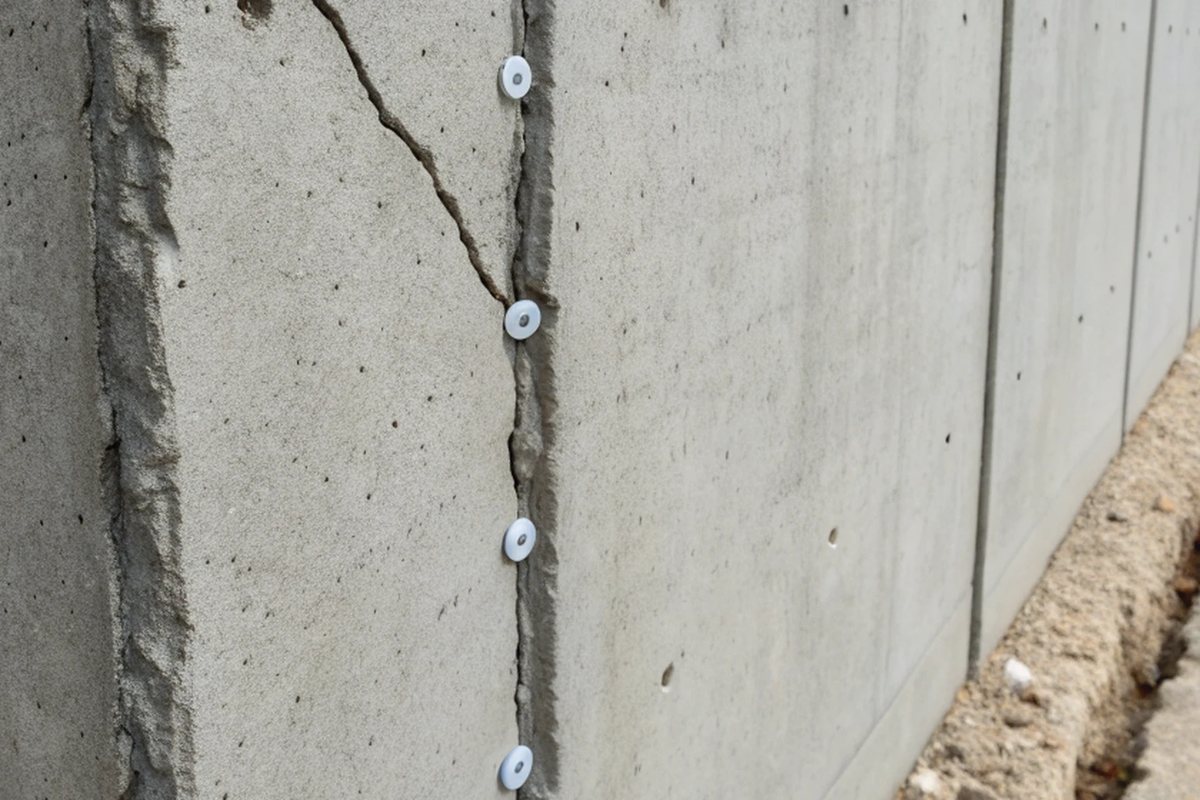
In poured concrete, most cracks begin as thin shrinkage lines from when the wall cured, and many stay dry for years. When one starts to seep, the fix is usually injection, with resin forced through surface ports until the opening is filled from face to face.
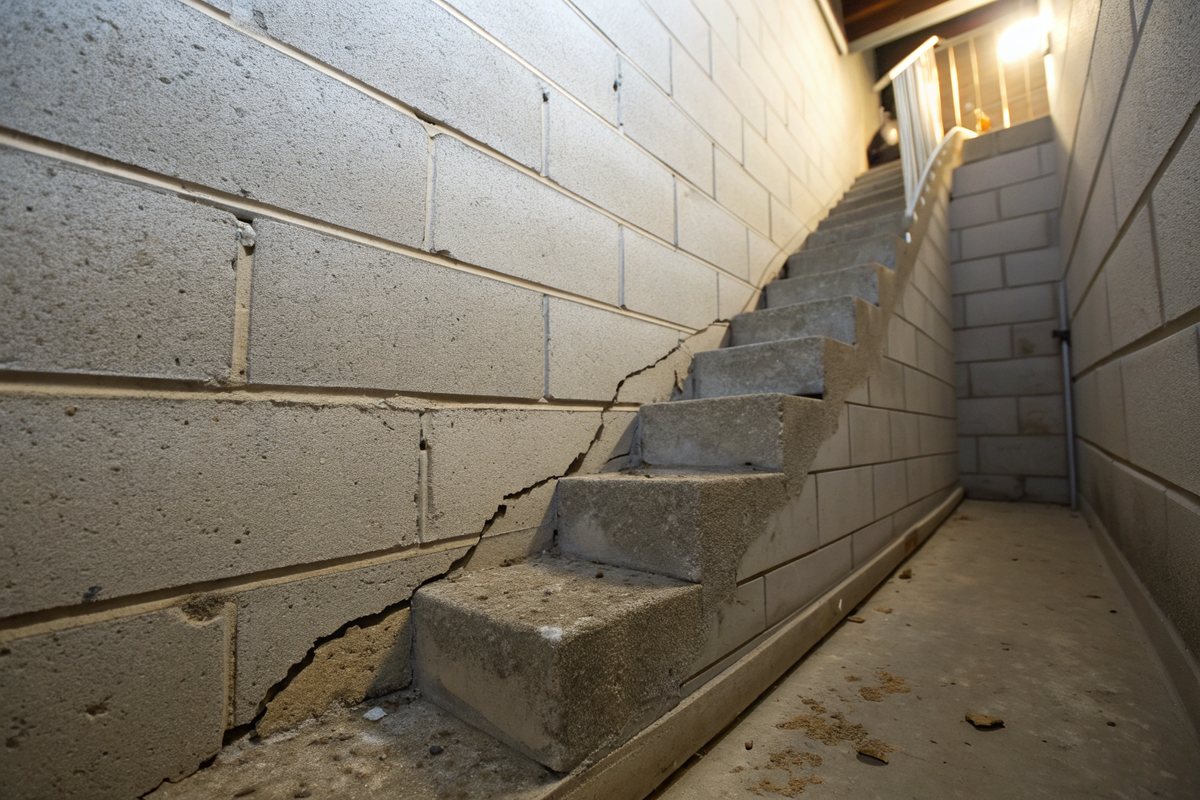
Block walls crack differently. The mortar joints give first, so cracks climb in a stair pattern, and hollow blocks can carry water sideways before it shows. Repointing (grinding out loose mortar and packing in fresh mix) is the usual repair, often paired with drainage, since sealing one joint can just move water to the next.
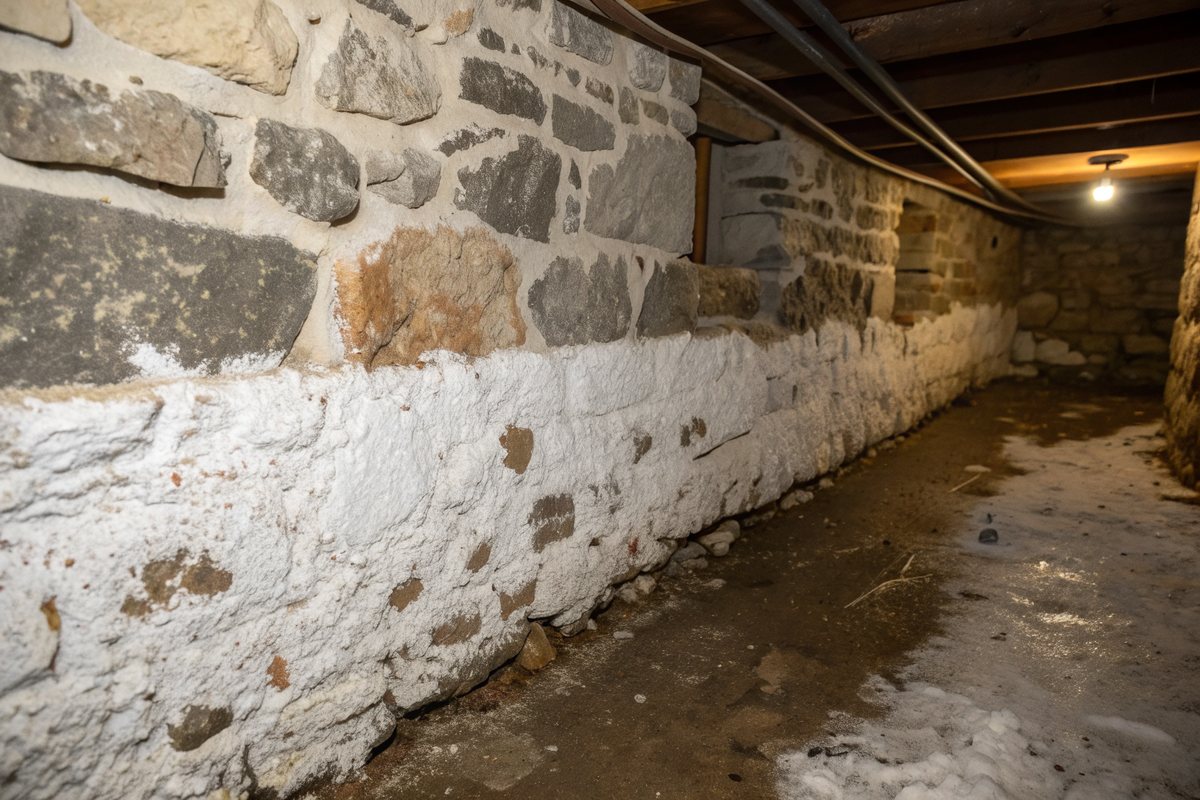
Older stone and brick foundations, still found under many older City of Rochester homes, rarely crack in one clean line; their mortar softens and washes out over decades. A hard modern mix can harm softer stone or brick, so ask which mortar the contractor plans to use.
Winter can widen what is already there. Water inside a crack can freeze and expand, so after long cold spells and lake-effect snow melting against the wall, a small opening can grow over a few seasons.
Some cracks deserve attention soon: a long horizontal crack, a wall bowing inward, a crack wider at one end, or one that keeps getting longer. None is a diagnosis, but each is worth a contractor's look before long.
What This Covers
- A thin, damp line in poured concrete. Resin injection from the basement side, typically finished the same day.
- A stepped crack through block mortar. Repointing the open joints, often together with an interior drain.
- Soft or missing mortar between stones. Raking out the worn joints and refilling them with a compatible mix.
- A sideways crack or an inward lean. Worth a contractor's look soon.
- A crack that keeps lengthening. A dated pencil tick at each tip shows any growth.
Costs to Expect
| Cost row | Figure | Source (year) |
|---|---|---|
| Typical basement waterproofing project | about $3,000 to $10,000 (average about $5,000) | Fixr national (2026) |
| Interior perimeter drain, per linear foot | $40 to $120 | Fixr national (2026) |
| Sump pump installation | $600 to $2,500 | Fixr national (2026) |
| Epoxy crack injection, per crack | $250 to $1,000 | Fixr national (2026) |
| Waterproof paint or sealant, per sq ft | $1 to $8 | Fixr national (2026) |
Most single-crack jobs fall on the injection row, while a block wall needing repointing plus drainage moves toward the project range. All five come from Fixr's 2026 national data, with no New York source and no price from this site. Wall bracing, excavation and structural repair have no sourced figure, so get each as its own written line.
What Happens on Job Day
- A close look at the wall. The contractor typically notes the wall type, the crack's width and direction, and when water appears.
- Preparing the crack. The surface is cleaned and ground, and injection ports go on or the old joint is raked out.
- Filling it. Resin goes in at low pressure, or fresh mortar is packed in and tooled smooth.
- Permits for bigger work. Structural repair and excavation usually require a building permit, issued by the City or by your town. City of Rochester applications go to the Bureau of Zoning & Permitting (585-428-6526) with workers' compensation insurance certificates, and the City notes New York does not accept "ACORD" certificates for that. The contractor files it, not you.
- Checking later. Look again after the next heavy rain or thaw.
A Simpler Way to Compare
Your details go to a single independent local contractor, who sees the wall and prices the repair in writing. This site only refers and advertises: no contractor or trade license, no opinions on walls, no bids, no work. Contractors may pay it a flat fee to advertise; you owe it nothing and get nothing from it.
Before work starts, ask for the insurance certificate, a few local references and a street address you could visit. For jobs over $500, New York wants a written contract both of you sign, covering the work, materials, price and staged payments. Early money sits in escrow or is backed by a bond, and the right to cancel generally runs to midnight of the third business day. Complaints about a contractor can go to the NY Attorney General's Rochester regional office, (585) 546-3240.
What People Ask First
Does every foundation crack need repair?
No. A thin, dry line in poured concrete is often just watched. Repair makes more sense when a crack lets water in, keeps growing, runs sideways along the wall, or sits beside a bulge. Dated marks and a few photos help a contractor judge it.
Epoxy or polyurethane injection: what's the difference?
Epoxy cures hard and bonds the two sides of a crack together. Polyurethane stays flexible and foams to fill the gap, which suits a crack that still leaks or shifts slightly with the seasons. Ask which one is planned, and see that the contract names it.
Why does the crack leak only in spring?
Melting snow and long spring rains can soak the soil against the wall for weeks, so a crack that stays dry most of the year finally has water behind it. Moving snow piles off that wall and turning downspouts outward helps meanwhile.
Related Basement Work
If the crack is only part of the dampness, the wet basement checker suggests a likely cause, and the pages on basement leak repair and full basement waterproofing explain the wider fixes.
Request a Crack Repair Estimate
Any visit and any repair are the independent contractor's, never this site's. Describe the wall and the crack on the form, with its length and whether it leaks, and one local contractor will be in touch about seeing it and pricing the work in writing. The choice to go ahead stays with you. Photos and measurements can wait until the contractor gets in touch.